.png "white on transparent (1)")
Ethiopia has a history of positioning itself differently from the rest of the continent. Its ability to resist European colonization, imperial heritage, and role in African diplomacy have long nurtured a sense of national singularity. This narrative of exceptionalism is not merely historical rhetoric; it has been woven into Ethiopia’s identity, political discourse, and legitimacy, and at this very moment, with the opening of the Grand Ethiopian Renaissance Dam (GERD) — Africa’s largest hydroelectric project — we may see a continuation of this trend, and this narrative which has symbolical as well as political dimensions. Beyond energy production, the GERD is intended to mark Ethiopia’s entry into the club of modern powers, to galvanize national unity, and to demonstrate resilience against external pressures. To understand the dam’s importance, one must situate it in Ethiopia’s more extended history of exceptionalism — from the battlefield of Adwa to the halls of the African Union.
Adwa 1896: Defiance as Identity
In March 1896, Adwa became the birthplace of modern Ethiopia’s narrative of greatness. Facing Italy’s attempt to invade the country into its colonial empire, Emperor Menelik II and the Ethiopian troops dealt the Italians a decisive defeat. Adwa became a continental landmark as well: it was the first time an African army had crushed a modern European colonial force in such a way that it prevented any further colonial invasion. Adwa sealed Ethiopia’s territorial independence, at least for some decades, while for Africa, it provided a lasting symbol that colonial conquest could be resisted, at least temporarily. Later on, intellectuals, nationalists, Pan-Africanists, and liberation movements across the continent drew inspiration from Adwa.
The battle of Adwa is in one way or another present in Ethiopian consciousness, and recently, the museum of Adowa has been set up in Addis Ababa. Each year, the battle is commemorated as a foundational moment of pride. In everyday political language, it is a metaphor for self-reliance, dignity, and the refusal to submit.
Resistance to Fascism: The Second Adwa
In 1935, Mussolini’s Italy invaded and occupied Ethiopia, forcing Haile Selassie into exile. Yet even in defeat, Ethiopia nurtured its exceptionalist identity. The resistance, the use of poisoned gas by the Italian forces, support coming from the outside world (Czechoslovak machine gun from Zbrojovka Brno is still present at the Ethnographic museum, Addis Ababa Unievrsity up to this day!), as well as Haile Selassie’s dramatic speech at the League of Nations in 1936 (warning the world of fascism’s dangers) gave Ethiopia sort of a global moral stature. Though liberation in 1941 owed much to British military support, Ethiopians emphasized their role as resisters to fascist aggression. Of course, the liberation of Ethiopia was primarily in the hands of the British, but it did not minimize Ethiopia’s exceptionalism.
This episode strengthened the sense that Ethiopia was not just another state, but a moral beacon with a unique mission, despite the fact that an “ideal” image of Ethiopia began to quickly fade away through all kinds of internal problems, protests, revolts, and rebellions. In the postwar years, Ethiopia became a founding member of the United Nations, and Haile Selassie carefully cultivated the image of Ethiopia as a bridge between Africa and the wider world.
Addis Ababa: Africa’s Diplomatic Capital
The 1960s marked another stage in Ethiopia’s exceptionalism. In 1963, Addis Ababa hosted the Organization of African Unity (OAU) founding conference. From then on, Ethiopia’s capital was not only its political centre but also the beating diplomatic heart of Africa where all important leaders kept shaking their hands.
Hosting the OAU allowed Ethiopia to project itself as the “African Rome” or, today, perhaps an “African Brussels” or simply a place where the future of Africa is being shaped. Addis Ababa became the permanent headquarters of continental diplomacy, a position consolidated when the OAU transformed into the African Union (AU) in 2002.
Despite Ethiopia’s internal crises — authoritarian rule under Mengistu Haile Mariam, wars with neighbors, and inter-ethnic violence — Addis Ababa’s continental role remained unshaken. Today, Ethiopia’s identity as the “capital of Africa” endures, reinforcing its claim to exceptional status, particularly in the era of a complete urban transformation, which everyone who arrives in Addis Ababa can observe.
GERD: A Modern Adwa on the Nile
At the beginning of the third millennium, Ethiopia found a new symbol to carry its narrative of exceptionalism into the 21st century. That symbol became the Grand Ethiopian Renaissance Dam on the Blue Nile. Construction began in 2011, financed not primarily by foreign donors but through domestic mobilization: state bonds, salary contributions, and support from the diaspora. I remember the day when the late Prime Minister Meles Zenawi announced the construction on Meskel Square, and one could feel in the air the pride of ordinary participants of this gathering.
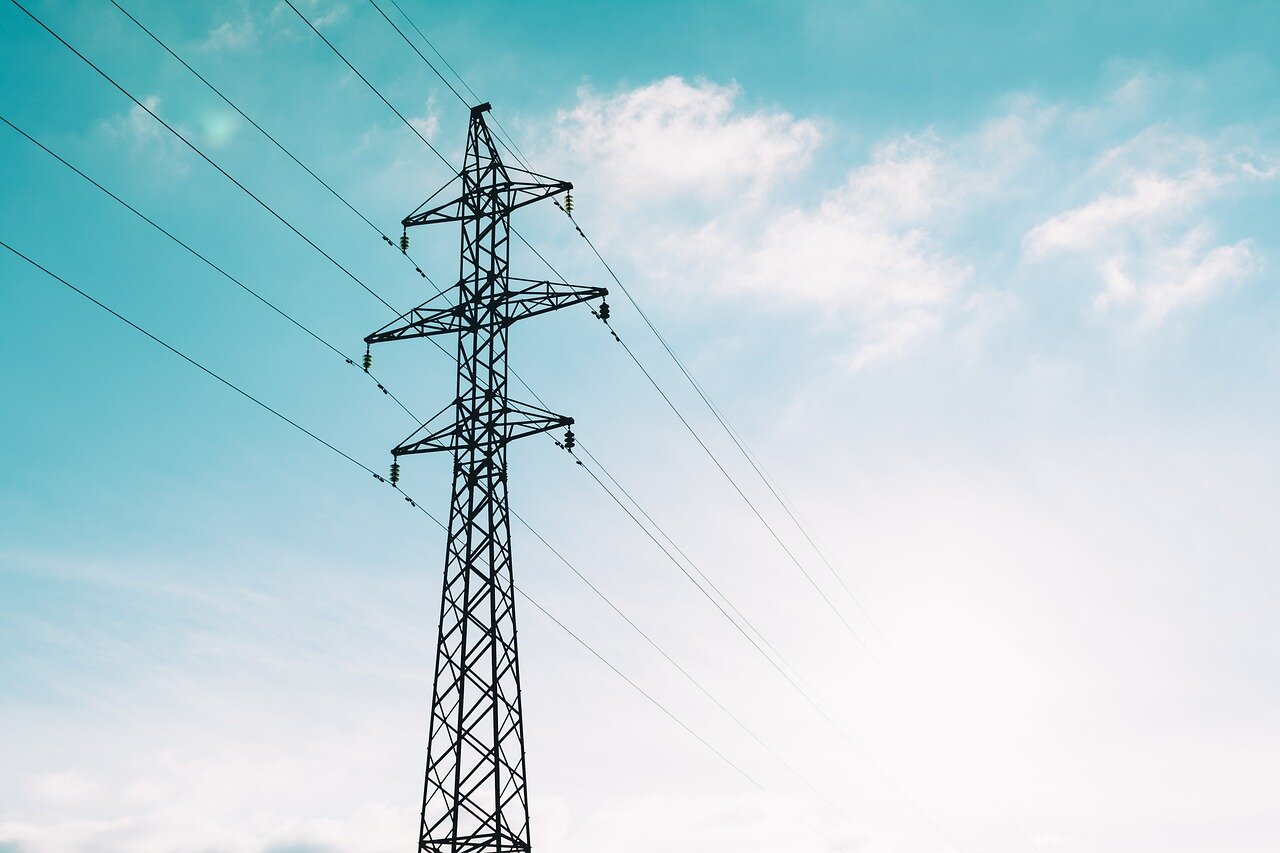
With an installed capacity exceeding 6,000 MW, the GERD is designed to end Ethiopia’s chronic electricity shortages and turn the country into a regional energy exporter, if not a superpower. It promises to support industries, electrify rural communities, and generate revenues from electricity trade with practically all neighbors and beyond.
Yet the GERD is more than infrastructure. It is a project that embodies national pride, self-reliance, and the determination to resist external pressure, this time particularly from Egypt which has been opposing the GERD construction since the very beginning.
The Limits of Exceptionalism
Despite its symbolic power, Ethiopia’s exceptionalist narrative encounters severe constraints. The GERD encapsulates both the potential and the contradictions of Ethiopia’s ambitions. Egypt and Sudan fear the dam will reduce Nile flows, threatening water security, and despite both Ethiopia and Egypt’s membership in BRICS, negotiations have repeatedly reached a deadlock, and the dispute risks destabilizing the region. Therefore, the GERD can also entrench rivalries.
Ethiopia also, and above all, faces deep internal fissures. Since the war in Tigray, violence has, as a cancer, metastasized, and significant parts of Ethiopia are now unstable; cases of kidnapping form a part of daily conversation in places like Gondar, Gojjam or Western Oromia. The dam has displaced tens of thousands, and its ecological consequences remain uncertain. Climate change and unpredictable rainfall may challenge the project’s long-term sustainability. Ethiopia requires political agreements and massive investments in transmission lines and cross-border grids to export power. Without them, much of the GERD’s capacity could remain idle. These realities reveal the fragility of exceptionalism: while the narrative is powerful in mobilizing citizens and legitimizing leaders, it often outpaces the state’s practical ability to convert symbolism into durable power.
Conclusion
From Adwa to anti-fascist resistance, from Addis Ababa’s role in Pan-African diplomacy to the GERD, Ethiopia has repeatedly cast itself as a country whose history and destiny are unique. This narrative has been a resource for unity and pride, a shield against external pressures, and a tool of political legitimacy.
The GERD is this story's most recent and perhaps most ambitious chapter. For the Ethiopian state, electricity is not just about power supply but identity, dignity, or sovereignty. Unfortunately, Ethiopia now stands at a crossroads. If it can harness the GERD’s energy, resolve internal conflicts, and develop cooperative agreements with neighbors, the dam could symbolize real prosperity and leadership. Ethiopia’s internal fragility these days, however, is rather worrying and challenges this “exceptional” position of the country.